
The Sandhill Cranes of the Sacramento Delta
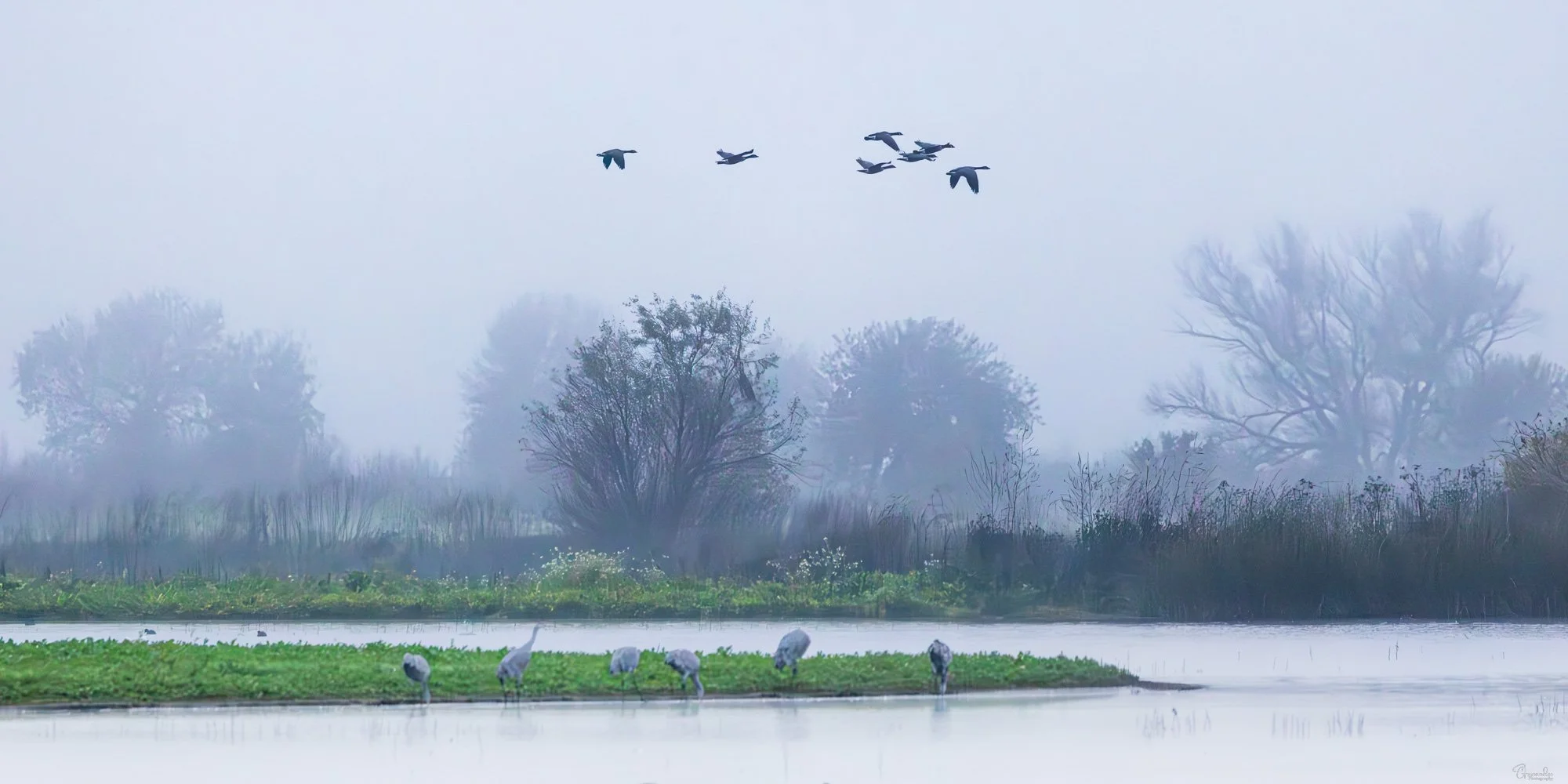
Sandhill Cranes at Cosumnes River Preserve
I spent a couple of cold, fog-soaked days in the Sacramento–San Joaquin Delta recently, chasing the winter migration of Sandhill Cranes with a camera in hand and numb fingers in my gloves. It wasn’t easy photography by any measure. The fog was thick all day, swallowing the landscape and flattening the light. The cold seeped in slowly and stayed. On paper, it was the kind of trip that might sound frustrating or unproductive.
Out there in the wetlands, it was anything but.
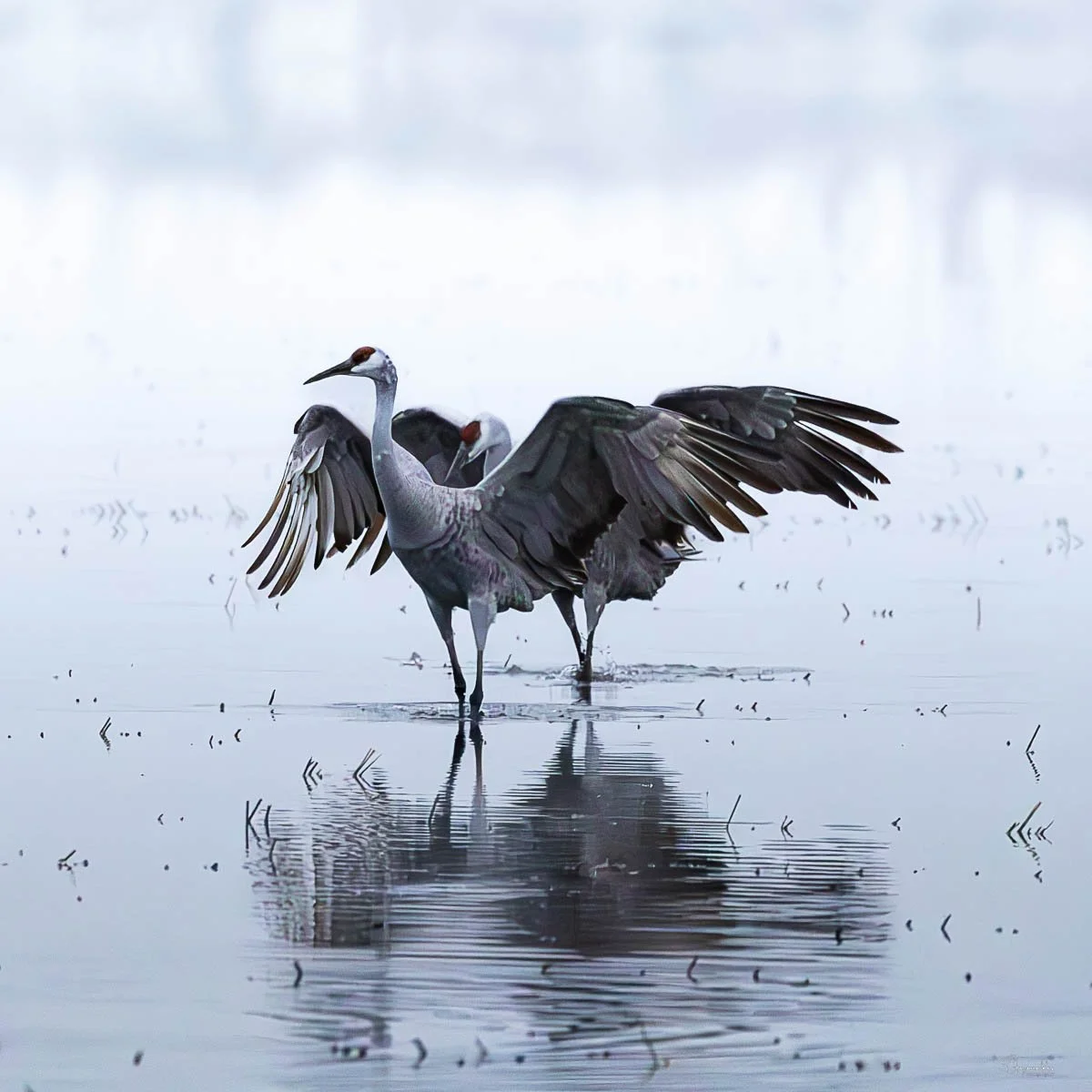
The Delta in heavy fog has a way of quieting everything. Sound travels farther, and the first thing you notice are the cranes themselves—rolling, prehistoric calls echoing through the mist long before you can see them. When they finally emerge, it’s often just silhouettes at first: tall, deliberate shapes moving through the haze, red crowns glowing faintly when the light is just right.
Photographing in those conditions was a challenge. Autofocus hunted endlessly, contrast was low, and compositions appeared and disappeared in seconds as the fog shifted. Many moments simply couldn’t be captured the way I imagined them. But every so often, the fog worked in my favor, simplifying scenes and adding a softness that felt true to the experience of being there. Some images were less about sharp detail and more about mood—about presence.
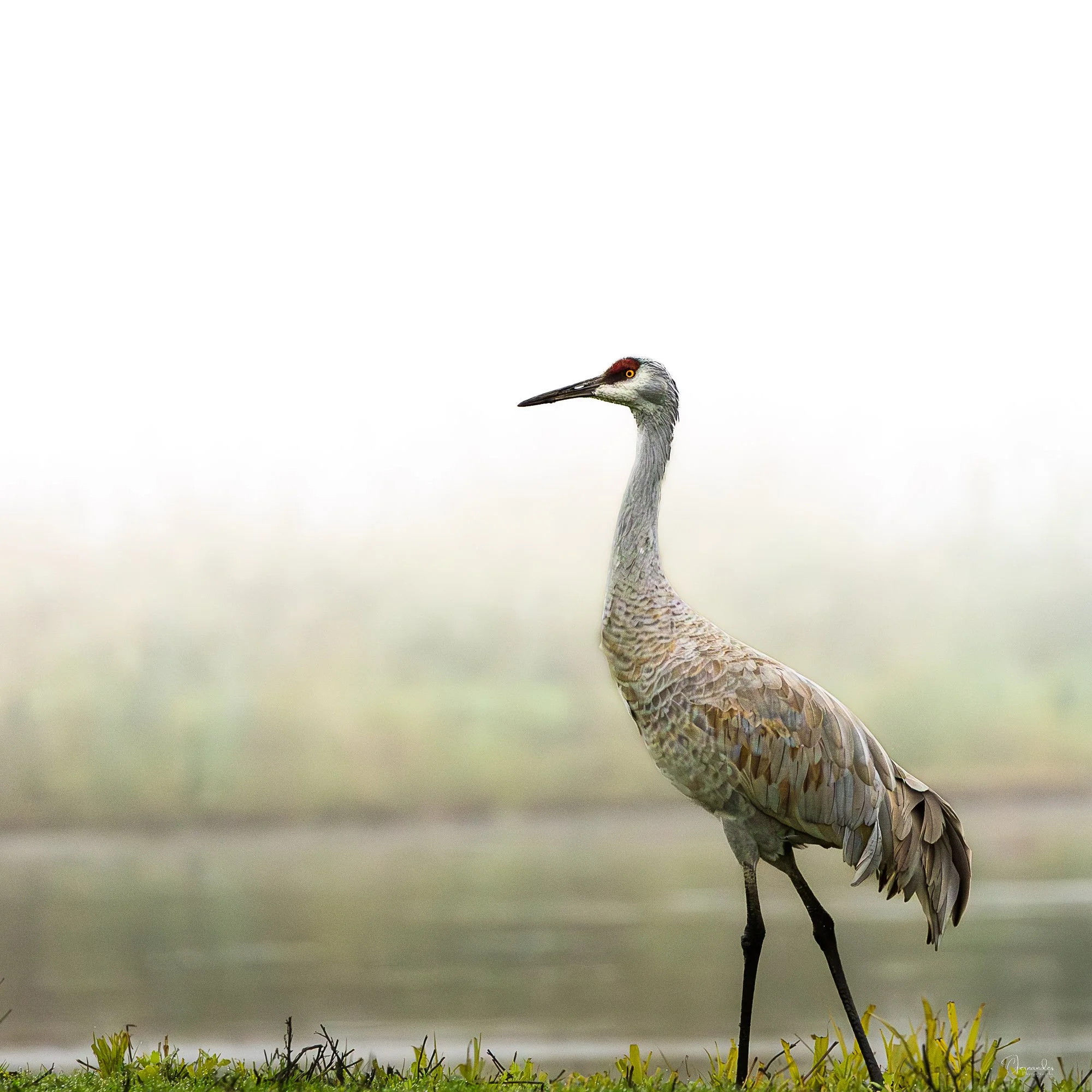
What stayed with me most, though, had little to do with the camera. Watching the cranes preen in the shallows, forage methodically through the grasses, or stand motionless as if carved from the landscape was deeply calming. Time slowed down in a way it rarely does. There was no rush, no checklist of shots to get—just the quiet rhythm of birds going about their winter routines.
Standing in the cold wetlands, watching cranes move through the fog, it was impossible not to think about how fragile places like this really are. Across the Delta and much of the Central Valley, wetlands have steadily given way to agriculture and development, reducing the habitat that migrating birds depend on for survival. For Sandhill Cranes and countless other species, these shallow marshes are not just scenic backdrops—they are critical links in an ancient migration route.
That’s why the presence of protected wildlife refuges here matters so much. They offer pockets of safety and sustenance in an increasingly altered landscape. The cranes have adapted, continuing to return year after year, finding food and shelter where space still exists. Seeing them forage, preen, and settle into the fog felt both hopeful and sobering—a reminder of what persists when we protect wild places, and what could be lost if we don’t. Organizations like the Lodi Sandhill Crane Association and The International Crane Foundation do an amazing job driving awareness, education and running habitat protection programs in partnership with local agricultural organization.
In the end, the fog, the cold, and the photographic challenges faded into the background. What remained was the privilege of being there at all, sharing a quiet stretch of winter with these remarkable birds. Spending those days in the Delta wasn’t just about images—it was about witnessing resilience, and leaving with a deeper appreciation for the wetlands that make moments like this possible.