
Wildlife Photography Tips: Ethics, Access, and Capturing the Moment
Ethical Wildlife Photography: Preparation, Access, and the Decisive Moment
Wildlife photography is about more than beautiful images. It begins with respect—respect for the animal, its habitat, and the delicate balance that allows wild places to exist.
As photographers, we have a responsibility to observe without interference, to document without disturbance, and to leave no trace of our presence. No photograph is worth stressing an animal, altering its natural behavior, or damaging the environment. The strongest wildlife images are created when the subject remains wild, unaware, and free.
Personally, I do not engage in baiting animals, or participating in a shoot in an environment where the animals are constrained or controlled in any way. Its likely easier to make good pictures in such environments but is it really wildlife photography at that point? Some conservationists will argue that such work helps move the conversation forward. However, in my view the journey is as important as the destination.
Accessibility in Wildlife Photography: Standing Out in a Crowded World
Today, almost everyone is a photographer. Powerful cameras are widely available, and many popular wildlife locations are crowded and predictable. Standing out now requires intention, not just equipment.
Accessibility plays a major role. Getting to places that most people can’t—or won’t—often leads to more authentic encounters and less disturbed wildlife. This may mean hiking farther, waking earlier, waiting longer, or exploring lesser-known terrain.
Access isn’t only physical. It’s also about timing and patience. Being willing to sit quietly, return repeatedly, and work within nature’s rhythms will consistently produce more meaningful images than chasing convenience.
Preparation for Wildlife Photography: The Work Before the Shot
The most important work in wildlife photography happens long before you arrive at a location.
Learning about your subject is critical. Study the animal’s habitat, feeding habits, seasonal movements, and behavioral patterns. Understand how it interacts with its environment and other species.
Wildlife moves fast. Reacting in real time is difficult. Predicting behavior, however, changes everything. When you know what an animal is likely to do next, you stop chasing moments and start waiting for them. Preparation also allows you to photograph responsibly, from a distance, without forcing interactions.
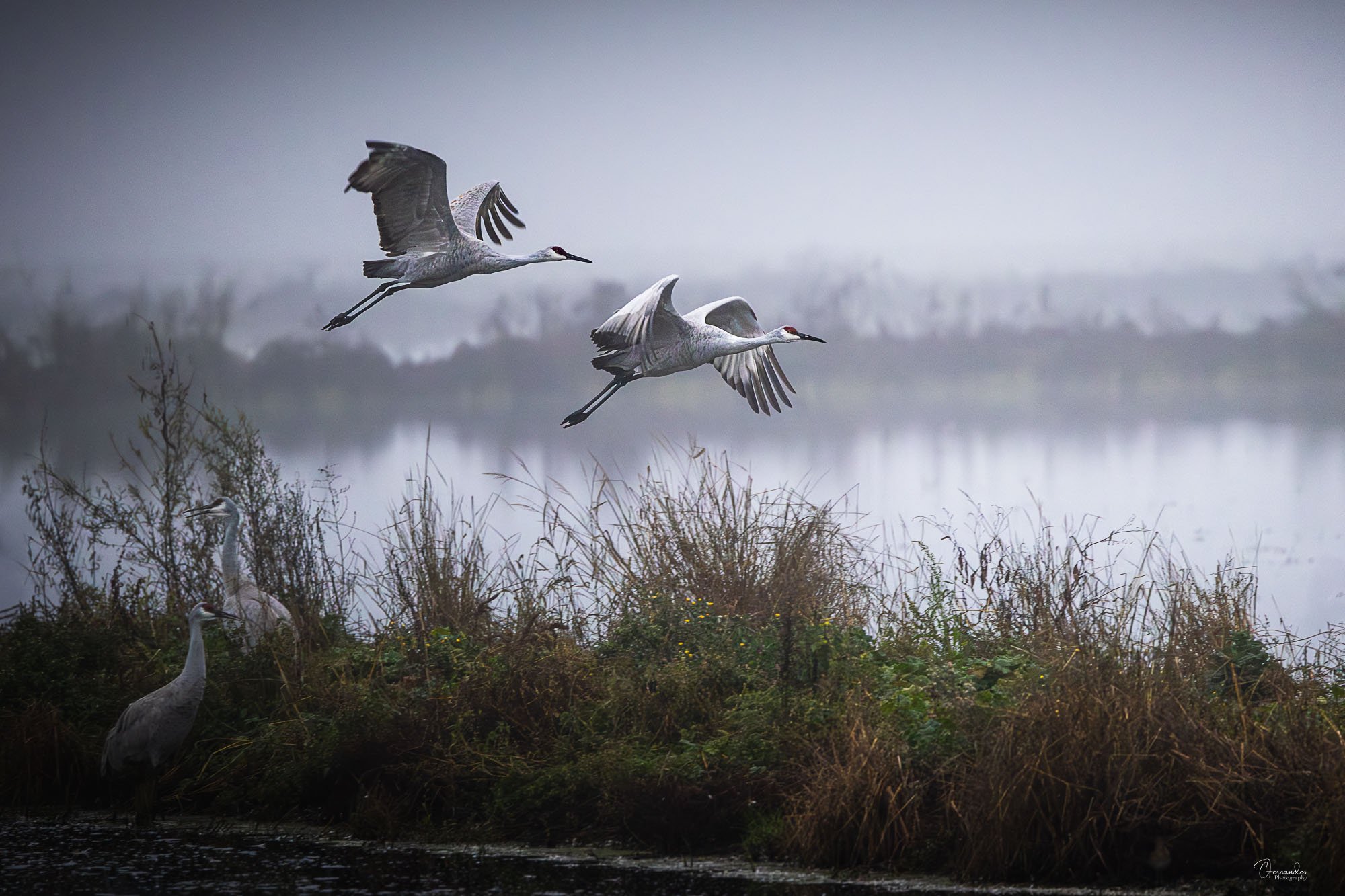
This image of Sandhill Cranes flying off at dawn to their foraging grounds was only possible because I could predict when they were about to fly off and the direction of their initial flight path. I spent days reading about their habits - where they roost, how they stick their neck out to understand wind direction and more, well before I got to location.
Capturing Wildlife in Motion: Timing Over Perfection
Wildlife is dynamic and unpredictable. Some of the most compelling images are not technically perfect—but they capture the right moment.
Focus on behavior and motion: a bird lifting off, a predator mid-stride, or a brief interaction between animals. These moments tell stories. A slightly imperfect image with emotion and action will always be more powerful than a technically flawless but static photograph.
Patience and observation are key. The more time you spend watching, the better your sense of timing becomes.
Composing Wildlife Photographs In Camera
While cropping is always possible in post-processing, composing in camera is a discipline that will significantly improve your photography.
Slow down before pressing the shutter. Think about framing, subject placement, and negative space. Consider where the animal is looking or moving, and leave room in the frame for that movement.
Intentional composition creates images that feel natural and complete—and sharpens your eye over time.
Background Awareness: Protecting the Image and the Story
It’s easy to become so focused on the subject that everything else fades away—but backgrounds can make or break a wildlife image.
Watch for distractions like branches intersecting the animal’s head, bright highlights pulling the eye away, or clutter that competes with your subject. Often, a small change in position—kneeling lower, moving a step left or right, or changing your shooting angle—can dramatically improve the composition.
The background matters because it shapes the story your image tells.
Wildlife Photography Camera Settings: Freezing Fast Action
Fast-moving wildlife demands fast shutter speeds. Birds in flight, animals running, or predators in pursuit require settings that prioritize sharpness.
Shutter speed should be your first consideration when photographing action. This may require raising ISO to compensate for limited light. Noise can often be managed in post-processing; motion blur cannot. Today’s cameras and post processing tools make it possible to capture with high ISO settings. Most wildife photography is done really early morning or late evening. Hard to capture fast moving objects and keep. the ISO levels low. I regularly capture images at 6400 or higher.
Use continuous autofocus, track your subject carefully, and stay adaptable as conditions change.
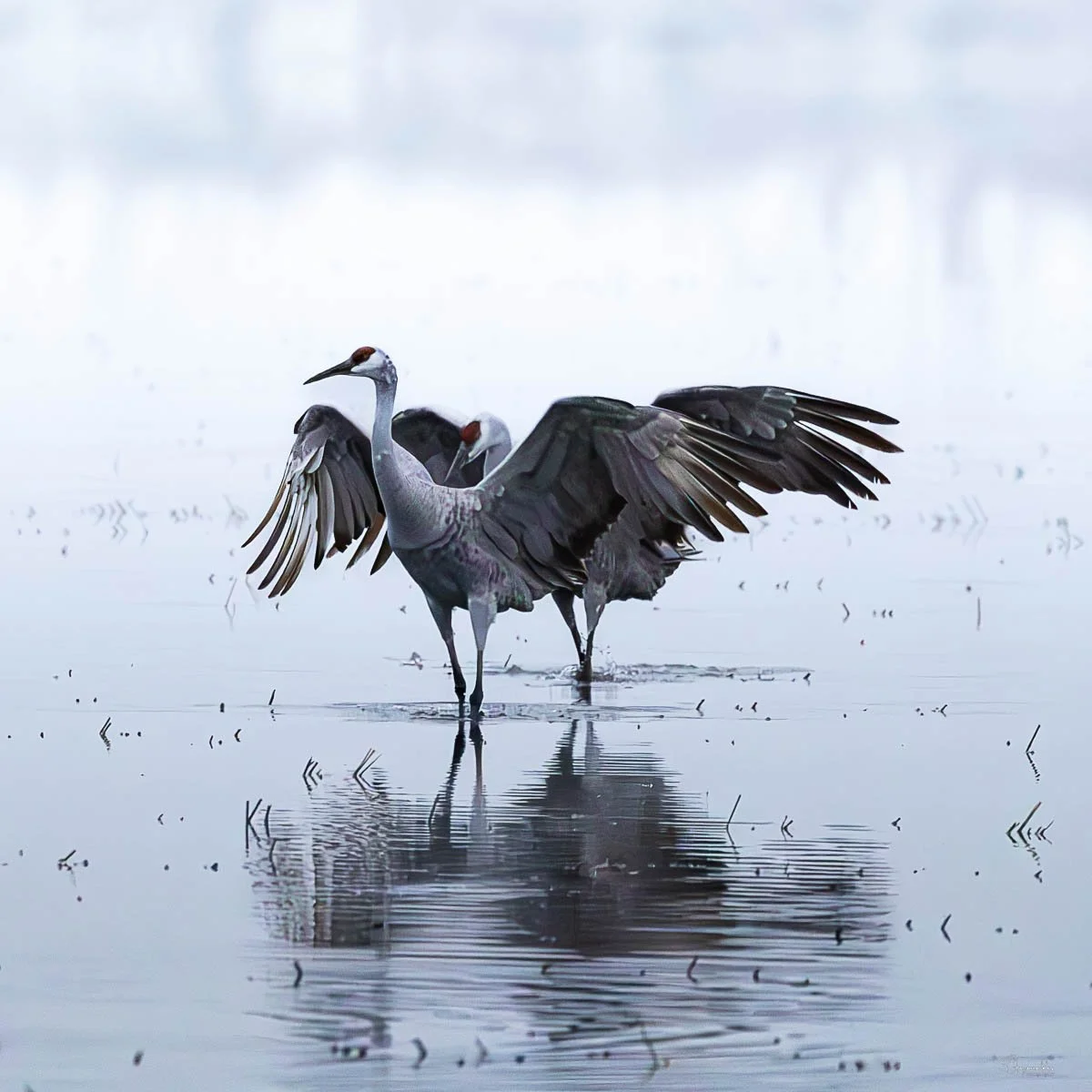
Cranes fly-in captured at dusk
500mm, 1/2000 sec shutter speed, f/7.1, ISO 25600. Processed in Adobe Lightroom.
Ethical Wildlife Photography: Final Thoughts
Strong wildlife photography is built on ethics, access, preparation, patience, and intent. The camera is only the final tool in a much longer process.
Observe quietly. Keep your distance. Leave the environment exactly as you found it.
When done right, wildlife photography becomes more than an image—it becomes advocacy, encouraging appreciation, awareness, and conservation of the wild places we are privileged to witness.