
Punta Laguna, Yucatán: Spider Monkeys, Mayan Conservation & Responsible Travel
Some places don’t announce themselves loudly. They ask you to slow down, listen, and look a little closer. Punta Laguna is one of those places.
We set out late morning from Playa del Carmen, as we wanted to get there late afternoon to time our visit with the optimal time for viewing Spider Monkeys.
The Drive Inland
About 1 hour and 45 minutes from Playa del Carmen, Punta Laguna sits tucked inside a protected forest managed by the local Maya community. On the way, we made a couple of memorable stops.
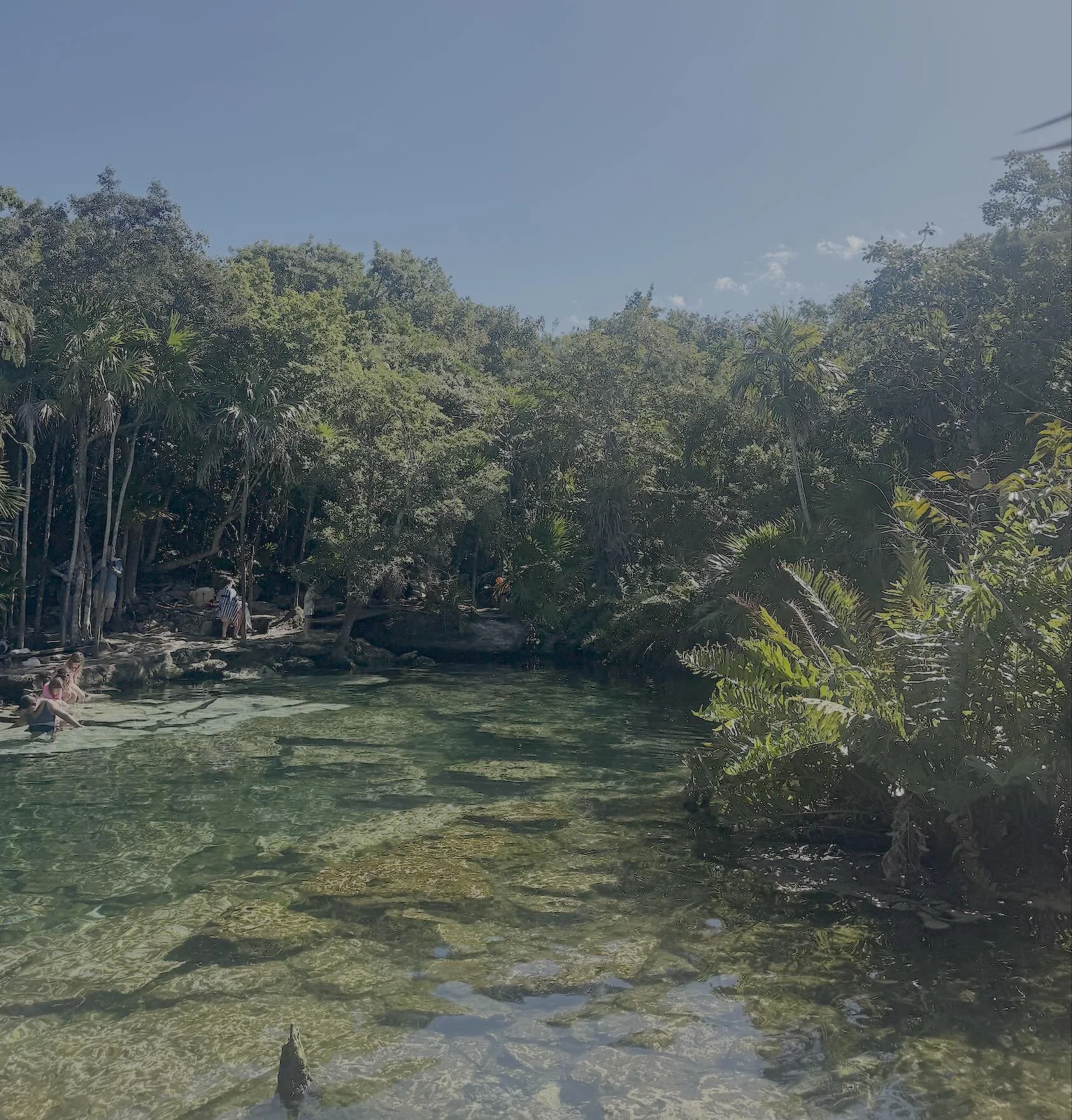
Cenote Azul
First was Cenote Azul, just off highway 307 and about 30 minutes form Playa Del Carmen, a refreshing pause surrounded by jungle—clear, cool water and a reminder of just how interconnected this region’s ecosystems are. Cenote Azul is a nice little swimming hole with a lot of shallow areas and a deeper area for cliff jumping.
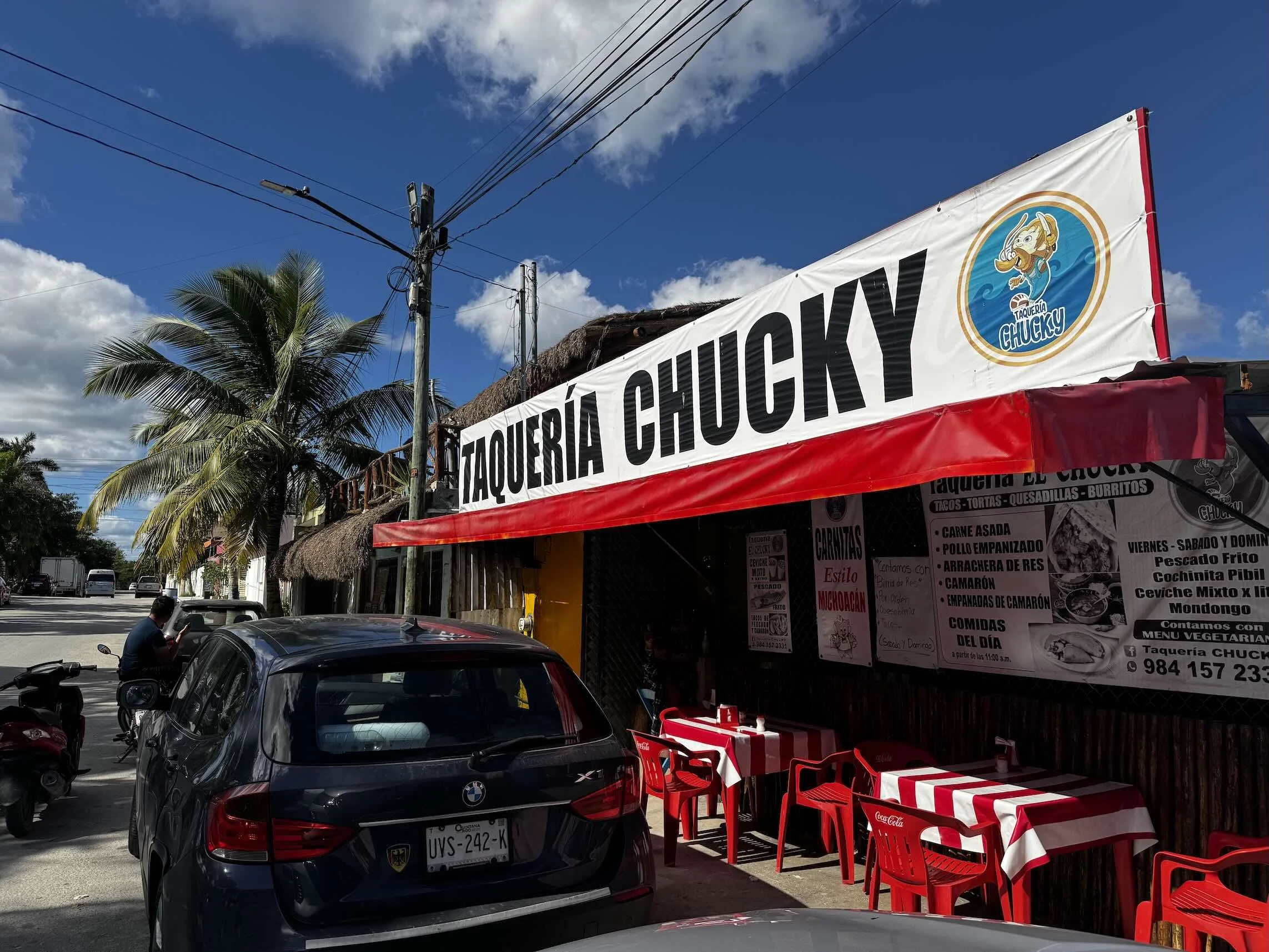
Later, on the drive to Tulum and about a ten minute drive from Cenote Azul, we stopped for lunch at a small, unassuming spot called Taquería Chucky. Located just off Highway 307 on Av. Gonzalo Guerrero, it’s exactly the kind of place you’d miss if you weren’t paying attention—and exactly the kind of place you’d want to return to. Simple, local, and full of character.
Visiting Punta Laguna
Punta Laguna is run entirely by the local Maya people, and that alone sets it apart. The entrance fee is very reasonable at 250 pesos, and while it’s possible to explore without a guide, I’d strongly recommend hiring one. A guided visit costs around 1,000 pesos, and the value goes far beyond information—it directly supports the local community and helps preserve this protected area.
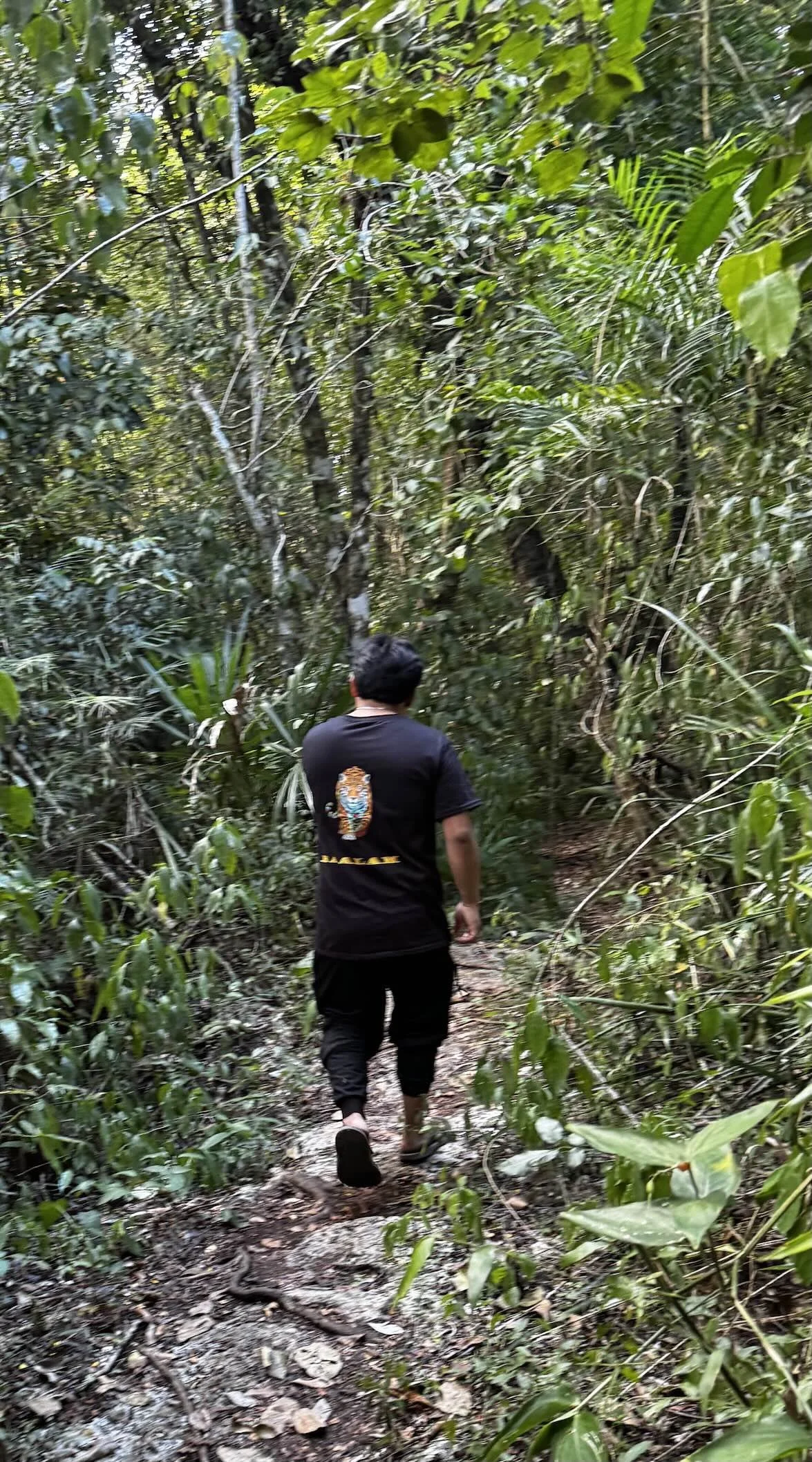
We visited with Eco Mayan Adventures and were fortunate to have Ernesto as our guide. He was home on vacation from university and brought both knowledge and genuine care to the experience. His English was excellent and his understanding of the forest, its history, and its wildlife added depth that simply wouldn’t be there on a self-guided walk.
Understanding Spider Monkey Behavior
Our main objective was to see spider monkeys (Ateles geoffroyi), one of the most fascinating—and sadly, endangered—species in the region.
Seeing them move through the canopy is unforgettable. Long limbs, effortless motion, and a strong sense of social connection within their groups. But behind that beauty lies a more fragile reality.
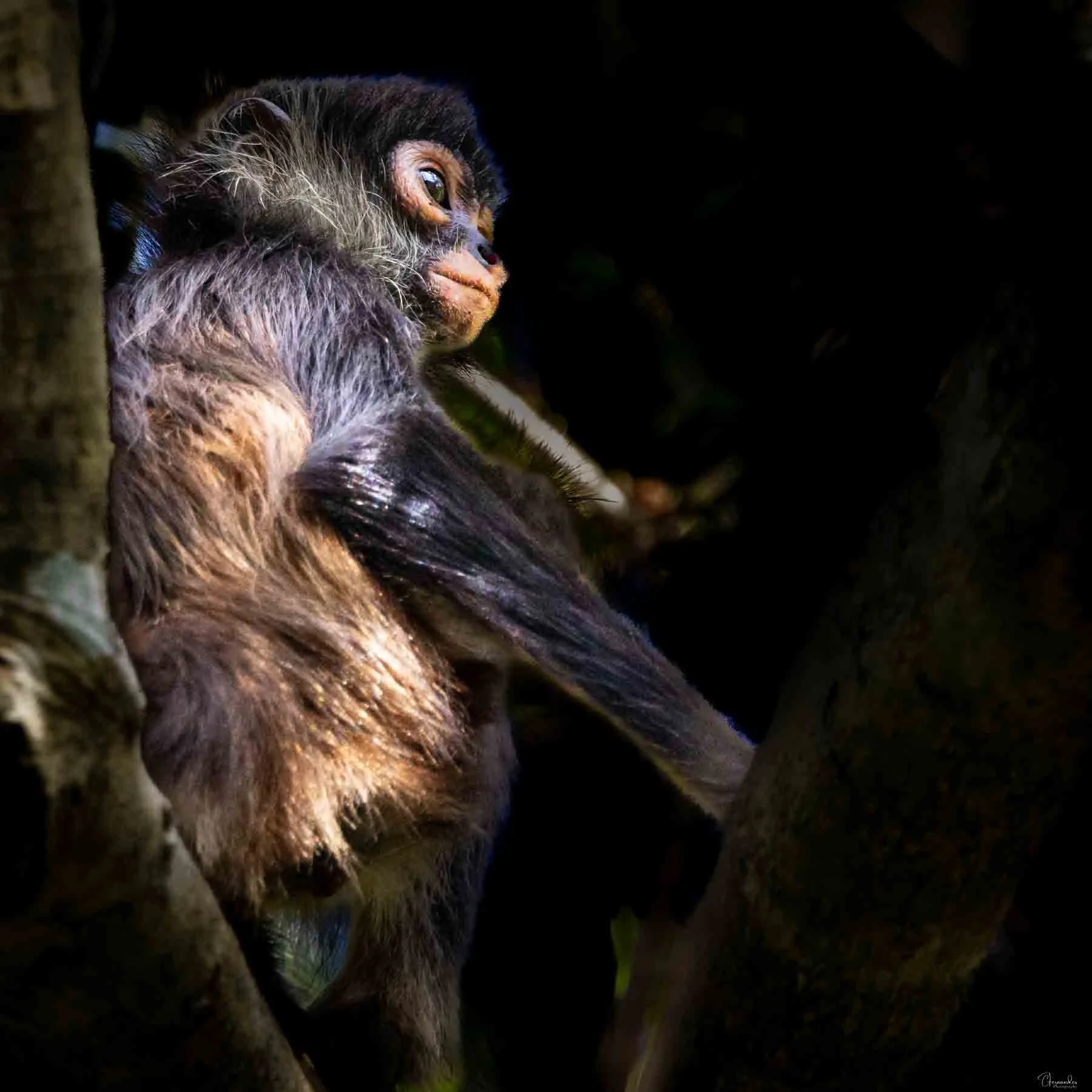
Spider monkeys are highly social, intelligent primates that spend most of their lives in the forest canopy. They move with remarkable ease—using their long limbs and prehensile tails almost like a fifth arm—as they travel in loose family groups. While they can be active throughout the day, their peak activity in Punta Laguna tends to occur in the afternoon and into the late evening, when temperatures begin to soften and feeding intensifies. This timing isn’t accidental; it aligns closely with fruit availability and energy conservation in a warm, tropical environment. Observing them during these hours often reveals more movement, vocalization, and social interaction than earlier in the day.
A Diet Tied to the Forest’s Health
In Punta Laguna, spider monkeys rely heavily on a fruit-based diet, making them especially vulnerable to habitat loss. They feed on seasonal fruits from native trees such as ramón (Brosimum alicastrum), chicozapote (Manilkara zapota), various fig species (Ficus spp.), and local palms, supplementing their diet with young leaves, flowers, and seeds when fruit is scarce. As they travel long distances between feeding trees, spider monkeys act as important seed dispersers, helping maintain forest diversity and regeneration. When forests become fragmented, these natural feeding routes disappear—disrupting both the monkeys’ survival and the long-term health of the ecosystem itself.
The Challenges Spider Monkeys Face
Spider monkeys are highly sensitive to environmental change. Deforestation, driven by agriculture, development, and expanding tourism infrastructure, has fragmented much of their habitat. Roads and cleared land isolate monkey populations, making it harder for them to find food, migrate, and maintain genetic diversity.
They are also vulnerable to illegal wildlife trade and human interference. Even well-intentioned tourism can cause stress when animals are approached too closely or fed.
The Dark Reality Behind Viral Videos
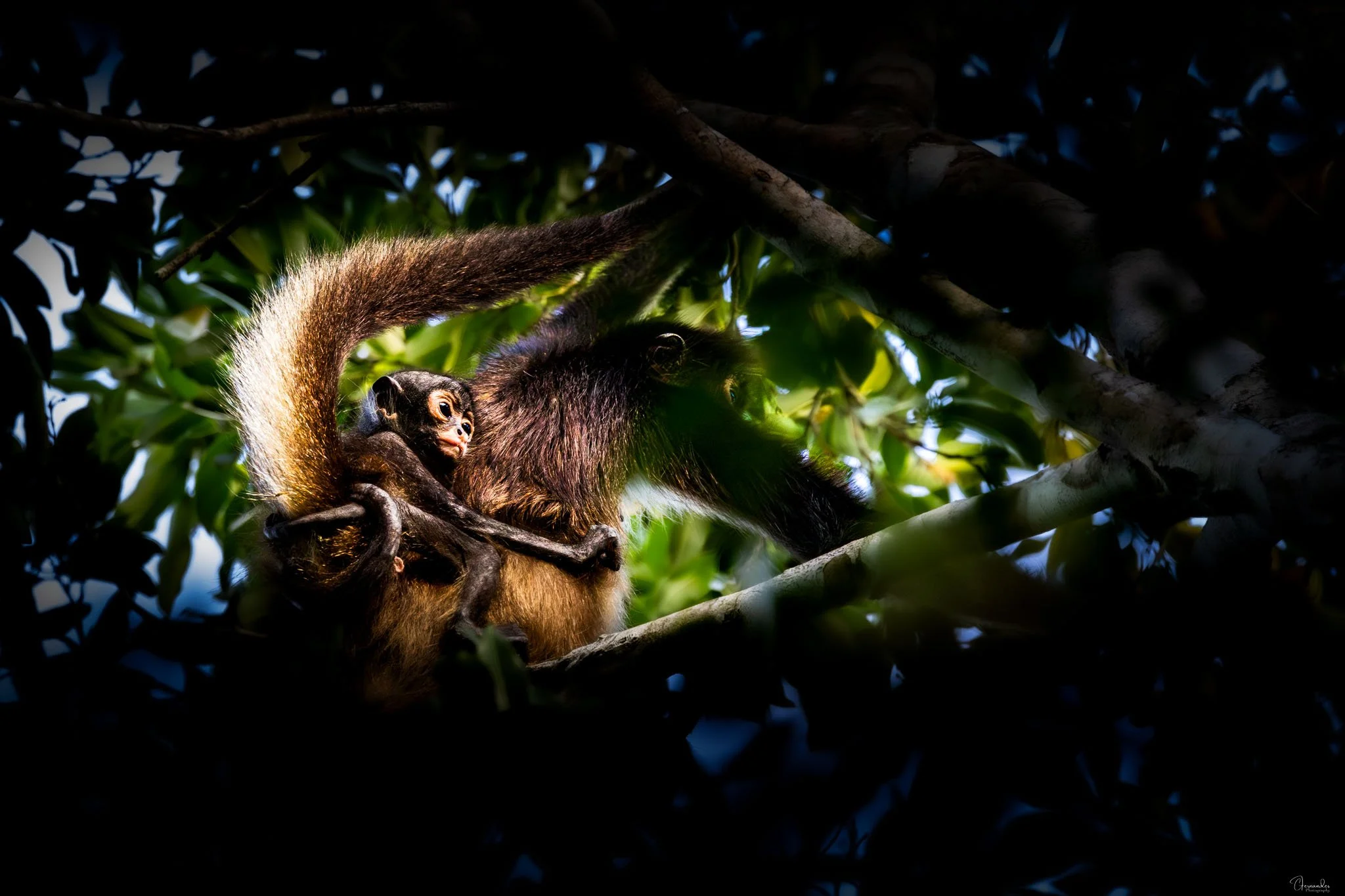
A mother carrying her baby through the forest
Occasionally, social media surfaces videos of baby spider monkeys dressed in diapers, clinging to humans, or being treated like pets. While these images are often framed as cute or harmless, they hide a deeply disturbing reality. Baby spider monkeys are almost always taken from the wild through violent poaching. Their mothers will not voluntarily give them up—poachers typically kill the mother to capture the infant. These babies are then smuggled through illegal wildlife trade routes, often sedated, hidden in crates, or passed off as other animals. Many do not survive the journey. Those that do may end up in private homes or illicit facilities in the United States and other countries, where they are ill-equipped to meet the complex social, dietary, and psychological needs of a wild primate. Every “cute” video shared or liked increases demand—and that demand directly fuels the destruction of families, forest ecosystems, and an already endangered species. So, please dont share or like such videos but instead report such content. That can go a long way in helping reduce the demand for such a brutal trade.
How We Can Help Protect Them
Responsible travel plays a meaningful role in conservation:
Visit community-run reserves like Punta Laguna, where tourism income directly supports protection efforts.
Hire local guides, not only for their knowledge but to ensure your visit contributes to sustainable livelihoods.
Respect wildlife boundaries—observe quietly, keep distance, and never feed animals.
Support conservation-focused organizations working to protect habitats and educate communities.
Choose slower, more intentional travel, favoring fewer places visited with greater care.
Take a stand against illegal wildlife trade by reporting social media content that glamorizes pet ownership of wildlife
Protecting spider monkeys isn’t just about saving a single species—it’s about preserving the forest ecosystems they depend on, and the cultural knowledge that has safeguarded these lands for generations.
A Place Worth Protecting
Punta Laguna isn’t flashy. There are no crowds, no staged encounters. What you find instead is something far more meaningful: a living forest, protected by the people who know it best.
Leaving Punta Laguna, I was reminded that conservation often begins with simple choices—where we go, who we support, and how we show up as visitors. Places like this endure because of those choices.
And that makes the encounter all the more powerful.
Sources & further reading:
Conservation status and species information are informed by the IUCN Red List (Ateles geoffroyi) and the Smithsonian National Zoo & Conservation Biology Institute. Background on diet, forest ecology, and seed dispersal draws on research summarized by Primate Info Net (University of Wisconsin–Madison) and CONABIO (Mexico’s National Commission for Biodiversity). Reporting on the illegal primate trade and social media exploitation is informed by work from TRAFFIC and World Animal Protection. Local context comes from our visit to Punta Laguna with Eco Mayan Adventures.