
Yellowstone & The Grand Tetons in Summer - through my lens
We had five days in late August. One of them in the Grand Tetons, the rest in Yellowstone. The plan was the bison rut. Everything else was going to be a bonus.
I was aware the timing wasn’t perfect but I hoped for the best. We were a week late.
By the time we got there the rut was mostly done and the bulls had moved on to guarding their cows. Still aggressive. Aggressive about something else. Bison behavior at this time of the year is a big change from the behavior I watched in Yellowstone in winter. The bulls are constantly in an aggressive mood and the tension around the herds is palpable.
Since we just missed the actual rut, the trip stopped being about timing and became an exercise in experiencing the place, learning about animal behavior this time of year and simply letting the moments unfold in front of us. You can't move the animal and you can’t time when it decides to do something. You can however move yourself, and be patient at the same time. There are times I’ve waited at a particular location for hours and left with absolutely nothing. That’s both the draw and sometimes the frustration with wildlife photography.
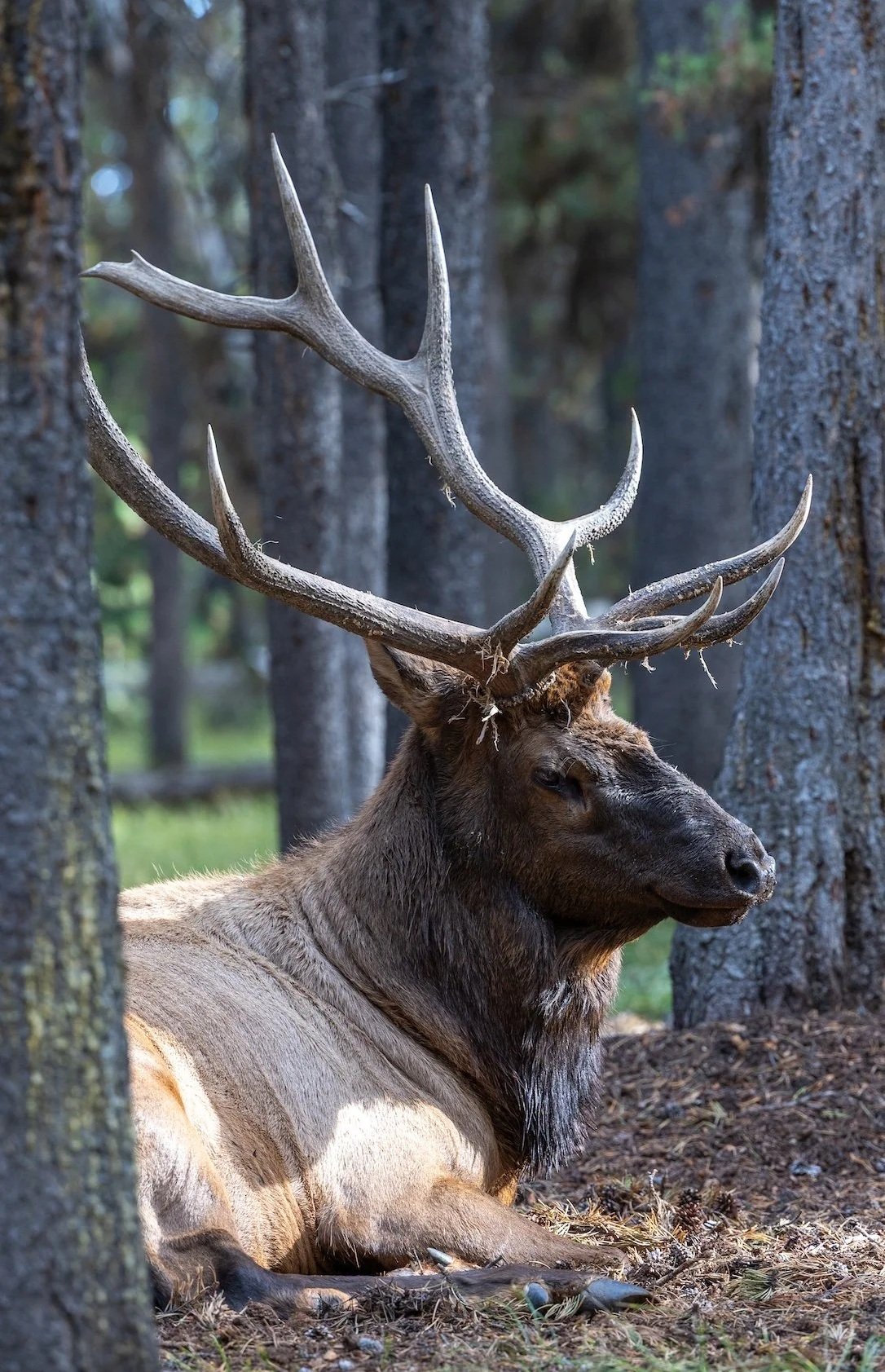
Bull Elk at Grant Village. This big bull walked right into camp one evening.
We camped at Grant Village, out by Yellowstone Lake. This location was perfect as it was right in between the Tetons and Hayden Valley. It made for a good basecamp.
Wildlife is active early, and the best light is early too, around sunrise and again at dusk. The same is true for landscape photography. We left camp at 4:30 or 5:00 every morning. Hayden Valley was about a forty minute drive while the Tetons were about 90 minutes out.
The Grand Tetons
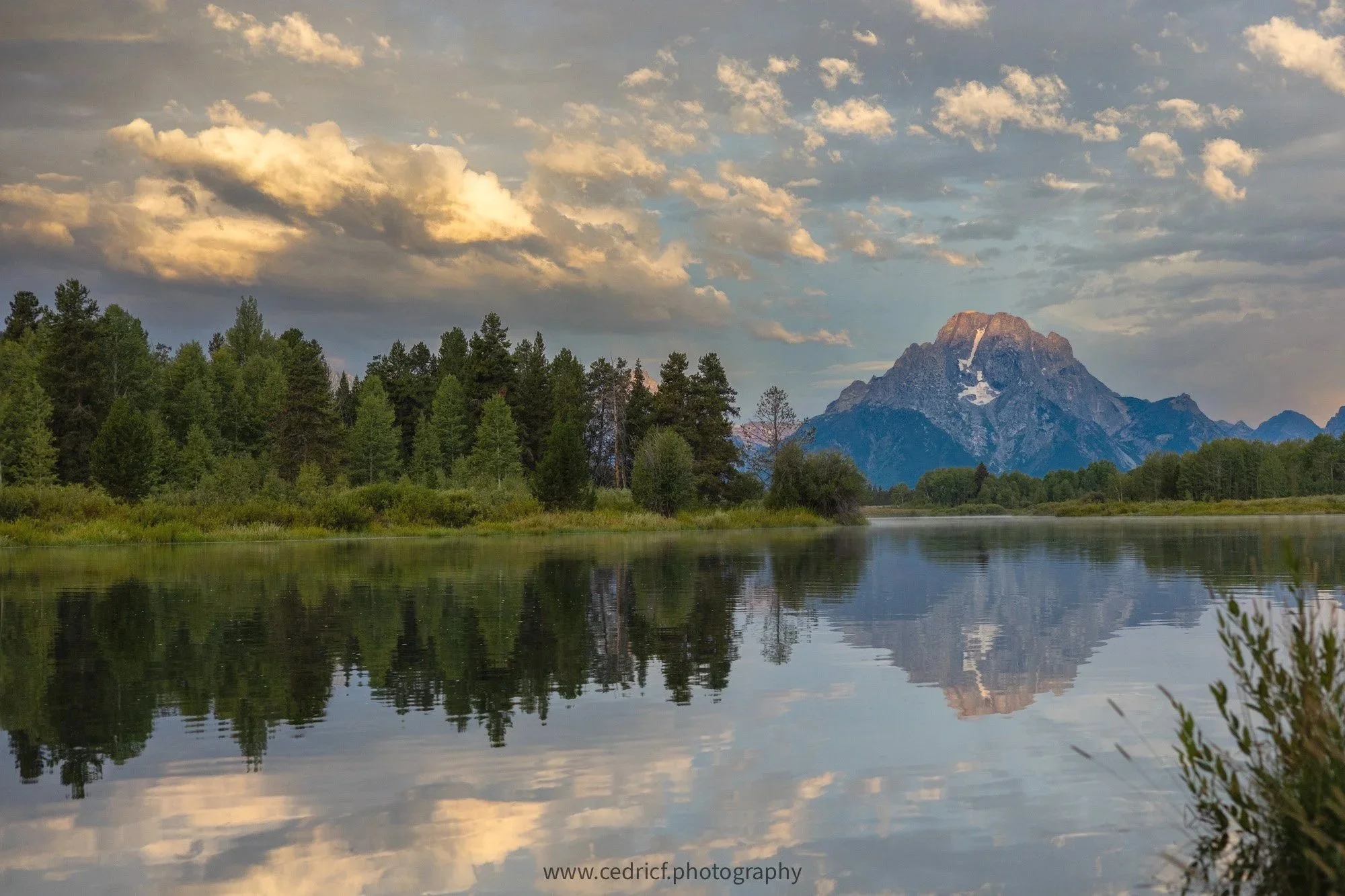
We had planned just one day in the Tetons. So I chose to prioritize shooting early at Oxbow Bend. We got there a little before sunrise, pulled up at the parking area and walked down the little trail to the river. Like me there were a number of other photographers already at location. The scene before us was simply amazing - still waters and a perfect reflection of the Tetons. I spent around 10 minutes scouting the place for a few different compositions. Most people had already staked out their positions and that made it hard. Nonetheless I found a spot low down by the water and waited for sunrise. My instagram post has four different images captured over a 30 minute window. You can see how the changing light impacts the composition and the final image. Timing is everything in landscape photography.
Hayden Valley
Hayden Valley is part of the lower loop in Yellowstone. This is the part of the park with all the most famous geysers and hot springs. The valley sits somewhere in between Yellowstone Lake and Canyon Village on the Grand Loop drive going towards Tower Junction and the northern loop. There are a number of turnouts all along the drive. In peak summer though be prepared for traffic jams as the turnouts simply aren’t enough to accommodate the large number of tourists. Luckily the park tends to be less crowded early in the morning.
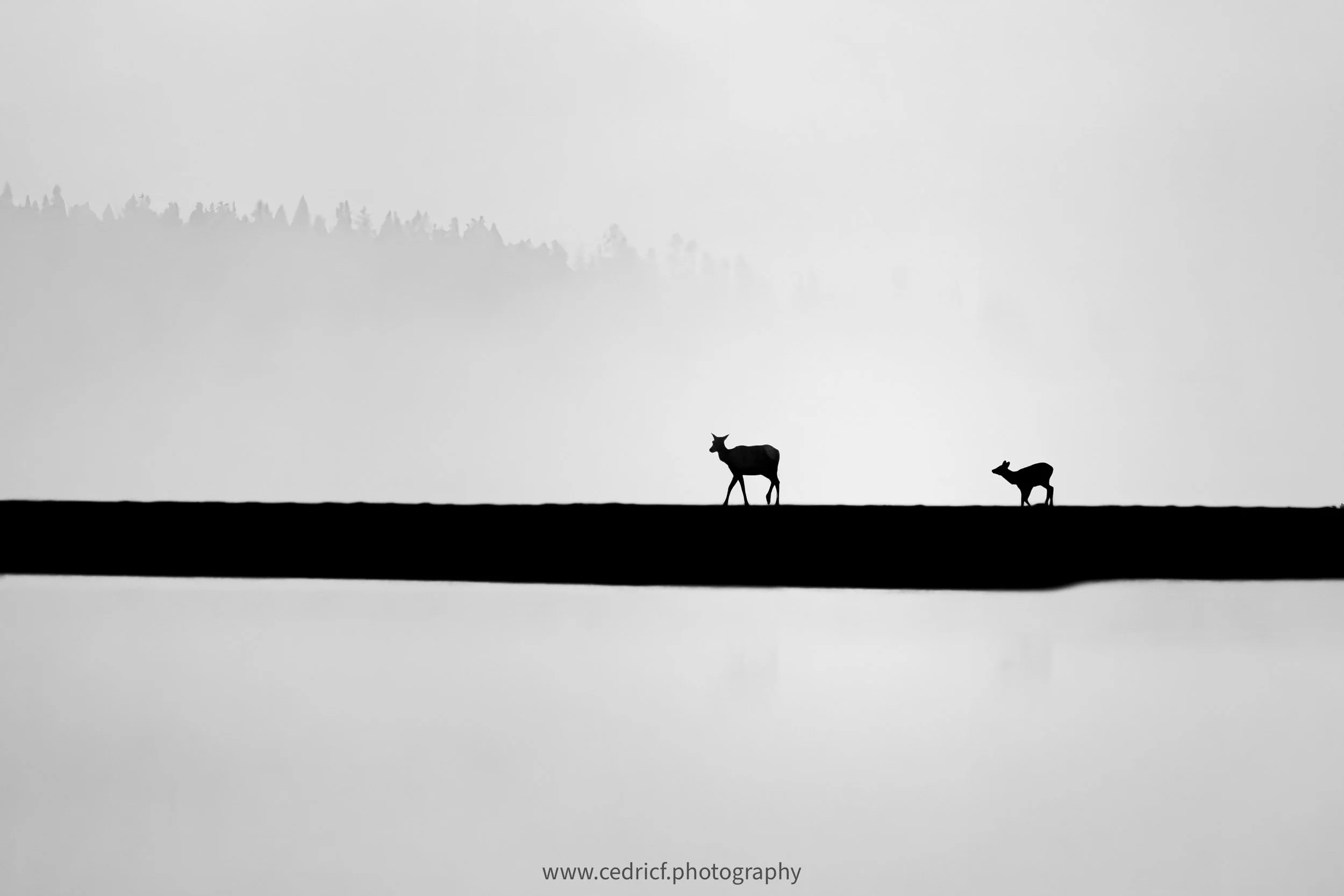
Elk by Yellowstone Lake
The first morning Hayden was fogged out. Bad for wildlife. Good for moody landscapes and minimalist photography. I went to Yellowstone for the animals and spent that morning photographing the place instead. When you’re out in the wilderness you take what mother nature gives you. I ended up connecting with a couple of beautiful moments. These are typically fleeting moments. The landscape changes dramatically and quickly as the fog moves through it.
Below are my favorite locations in Hayden Valley for spotting wildlife.
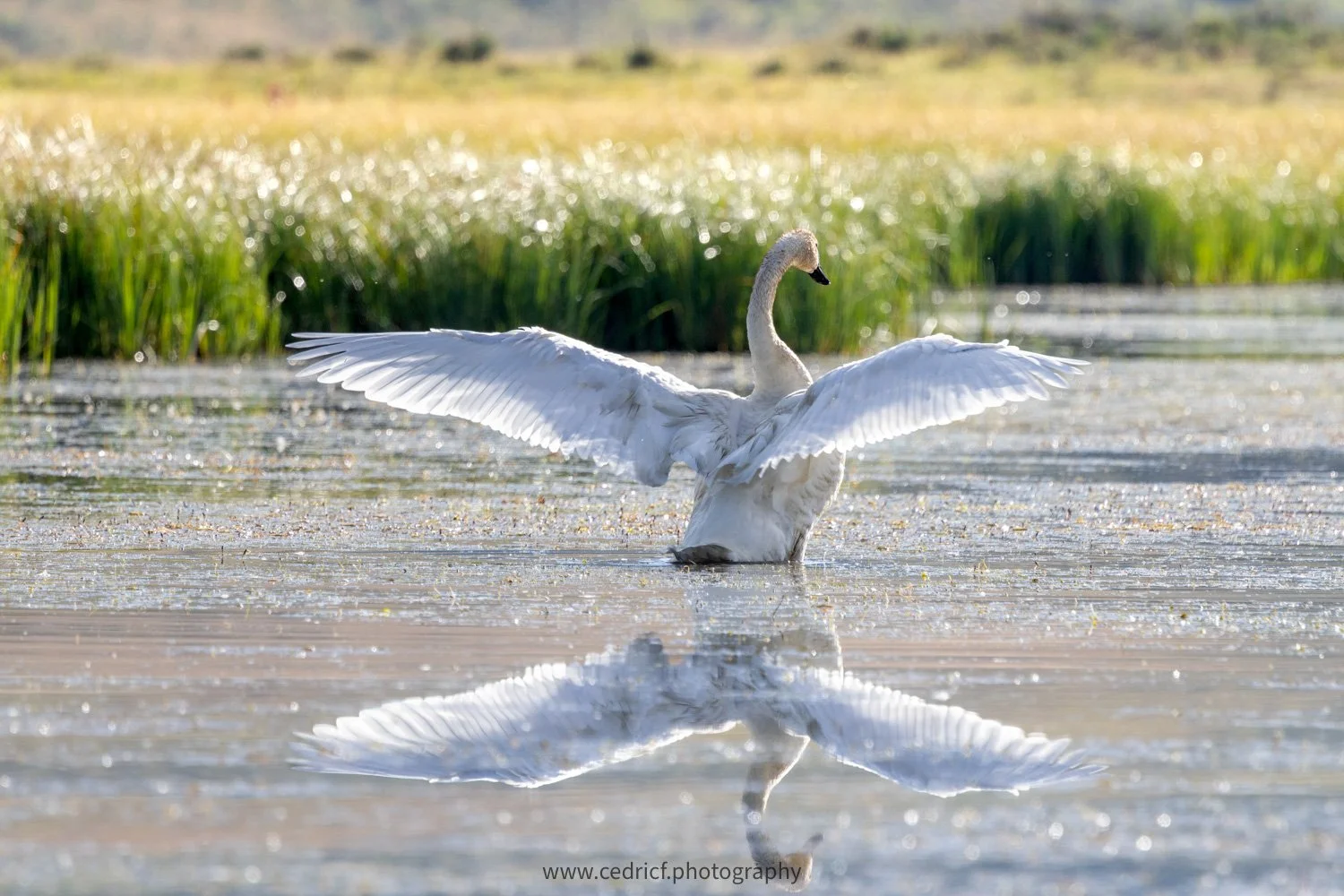
Hayden Valley Overlook.
Get past the Mud Volcano area and the road climbs a small hill. At the top there are two parking areas a few hundred yards apart. It's a good place to find animals. It's a poor place to photograph them. You're looking down, and looking down makes everything small.
We spotted a pair of trumpeter swans from up there. Getting a picture of them meant walking. I went down the hill toward the edge of the water and came away with a couple of frames I'm glad to have.
Trout Creek.
Pull into one of the turnouts near Trout Creek for pelicans and ducks, and a bald eagle if you're lucky. Honestly this is as much a place to stop and look as a place to shoot. The landscape is beautiful and you don't need a reason. The Yellowstone River runs through this area close to the road. You might find Bald Eagles and Ospreys diving for fish around this area.
Alum Creek.
This is where I had the most success with bison in Hayden. It’s also easier to get low in this area because the grazing grounds are slightly elevated compared to the road. There are also a few easy hiking trails in this area. Those trails though were unfortunately closed during our trip due to high bear activity.
Past Alum Creek the road climbs quickly and you're out of the meadows. Keep going north towards Canyon Village and you get the waterfalls and the Grand Canyon of the Yellowstone.
Lamar Valley
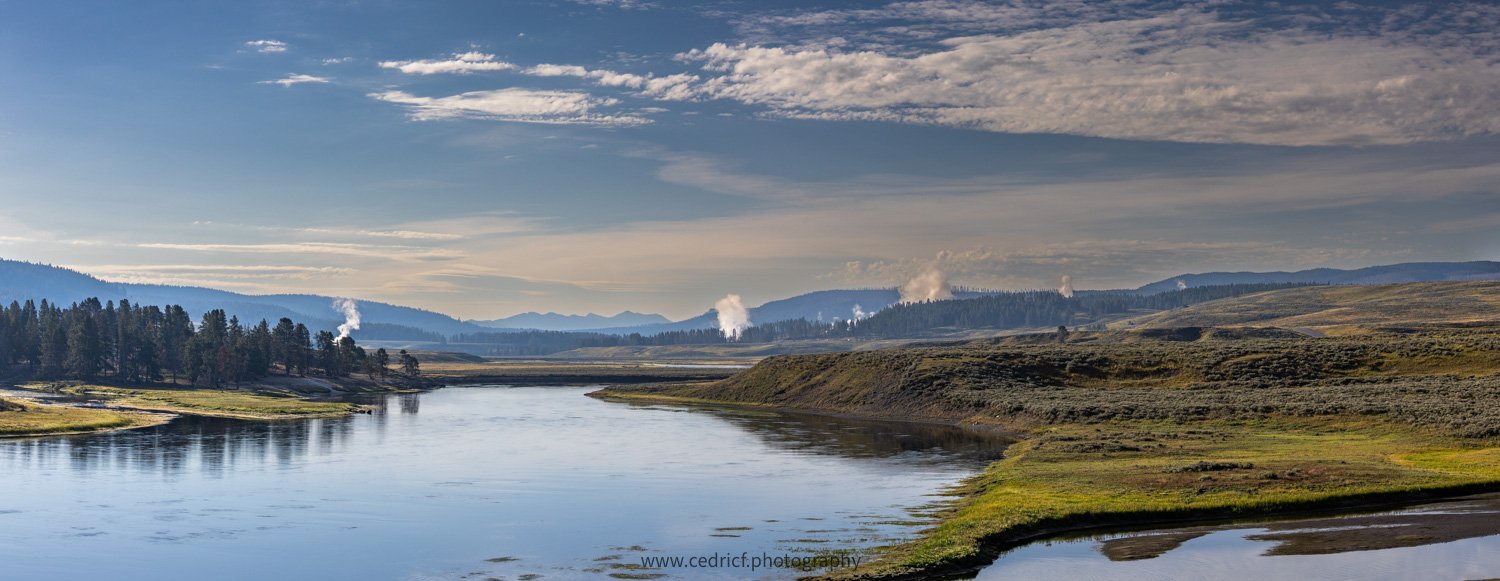
Lamar is massive. It is called the Serengeti of America and for good reason. The bison herds here are enormous. Pronghorn are a common sight. Elk, moose and bears turn up on the trails around the valley often enough to make it the most dense and diverse big mammal location in North America.
We got lucky. The Junction Butte wolf pack was on a carcass, and we watched them over two days. They were too far out for a photograph worth keeping. I got a short video and that's it. It was still the highlight of the trip.
The evening I went too far
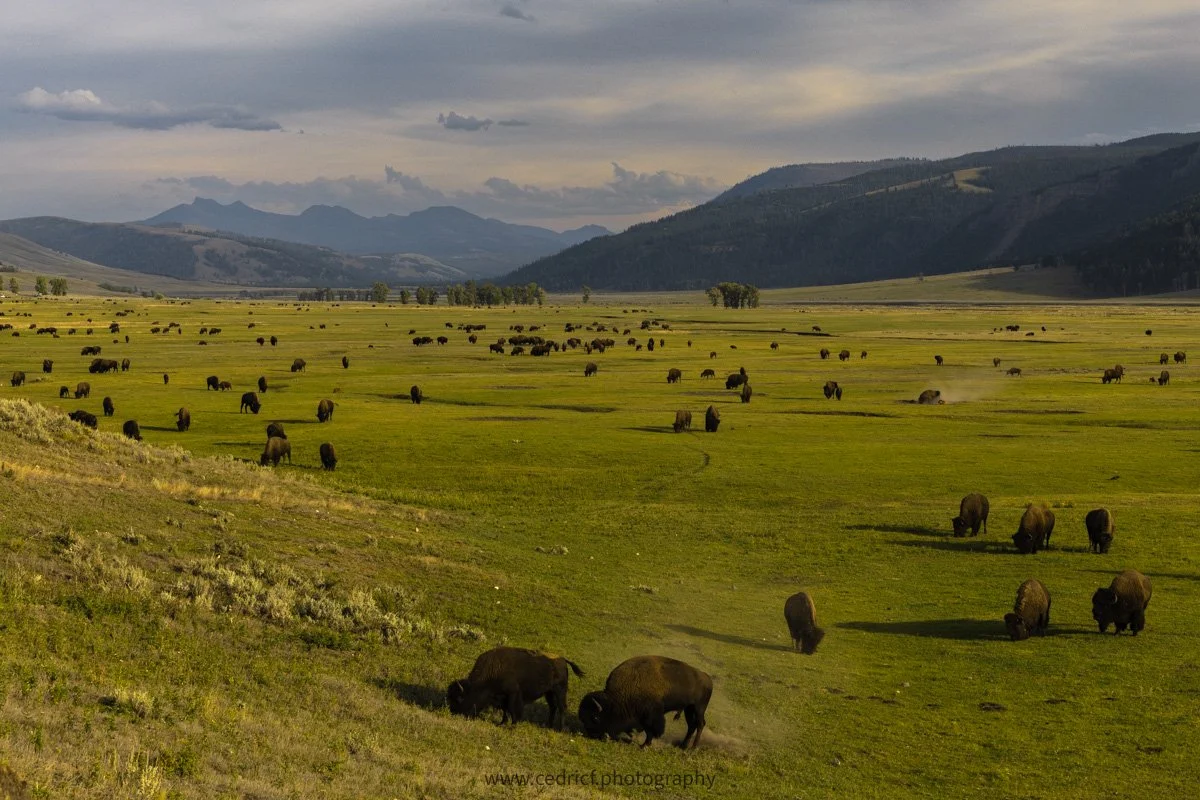
One late evening we spotted a huge bison herd down on a flat meadow below the road.
Everything I said about vantage points applies here. From up on the road those animals were specks. Bison are big, muscular, beautiful animals, and I wanted a frame that said so. So I started down.
You can tell the hillside is a bison highway. They've carved the trails themselves. I got almost all the way to the bottom and stopped. Too many animals, too many bulls in a bad mood, and eye level was going to cost more than the picture was worth. I am always conscious about disturbing animals in their habitat and as much as I wanted to go all the way, I felt it would be too risky and at the same time disrespectful to the wildlife. I set up where I was and started shooting.
While I was working, a bull came up behind me. He wanted the path I was standing in, and I had no idea that was the case. I was so engrossed in the moment that I didn’t see nor hear him.
A couple up on the hill saw it and managed to get my attention. I got out just in time. He was likely less than twenty yards from me, and mad as hell. If they hadn't, I'd probably be the subject of another viral Yellowstone video. I never got to meet them and I'll be thankful to them for a long time.
Lesson learned.
What I'd tell you
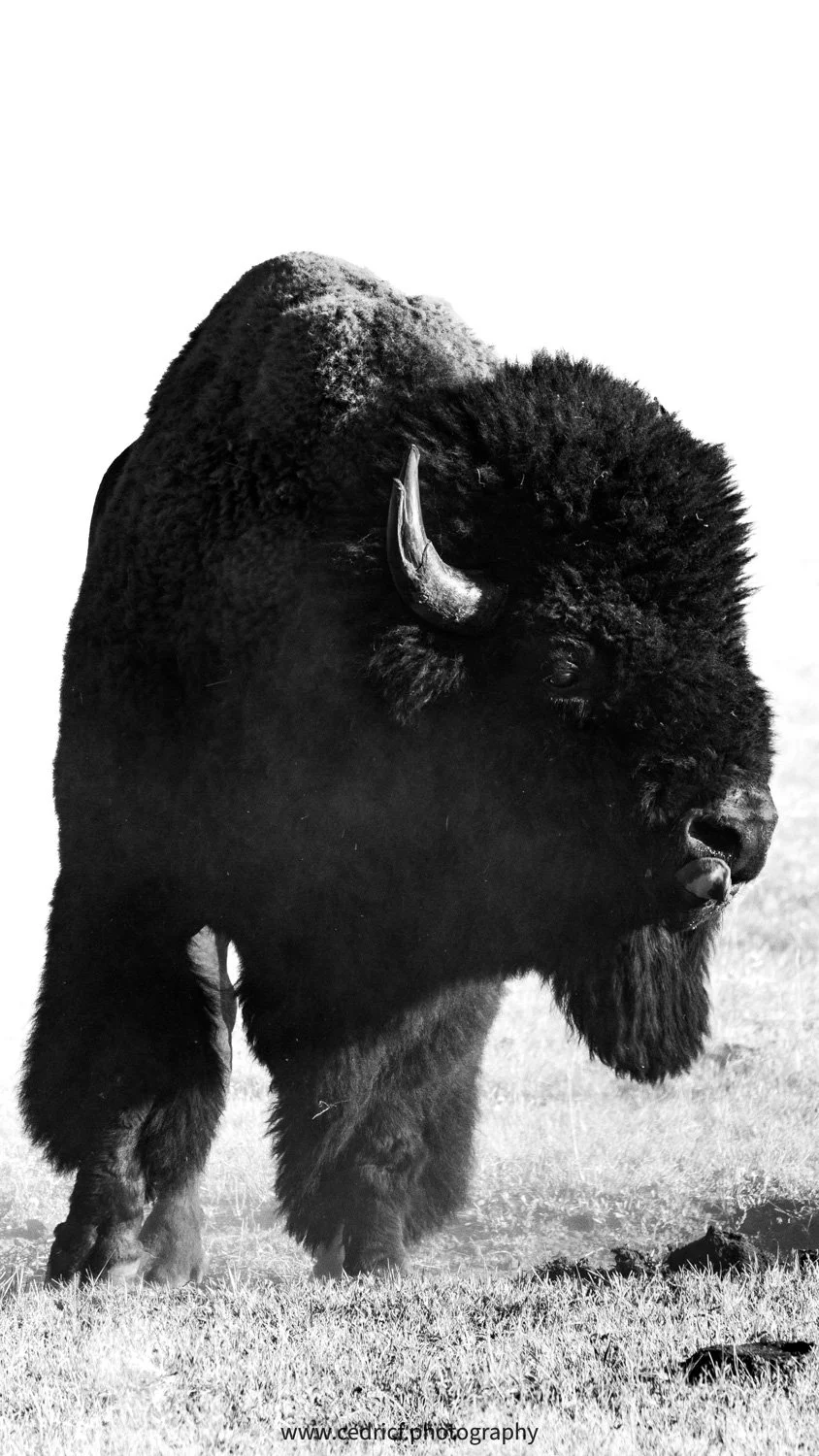
Get low. Shoot wildlife at eye level when you can, because that's the difference between a picture of an animal and a picture of a landscape with an animal in it. Yellowstone is full of wildlife but it’s also full of amazing landscape photography opportunities.
Most importantly stay in tune with your surroundings. This is a dynamic environment especially at dawn and dusk when wildlife is very active. As a photographer I constantly push the boundary of how far I’m willing to go to get the shot. I know I was on the wrong side of it that evening, and I know a stranger is the reason it didn't matter.
More on how I think about distance and disturbance in the field is in my notes on wildlife photography ethics and access.